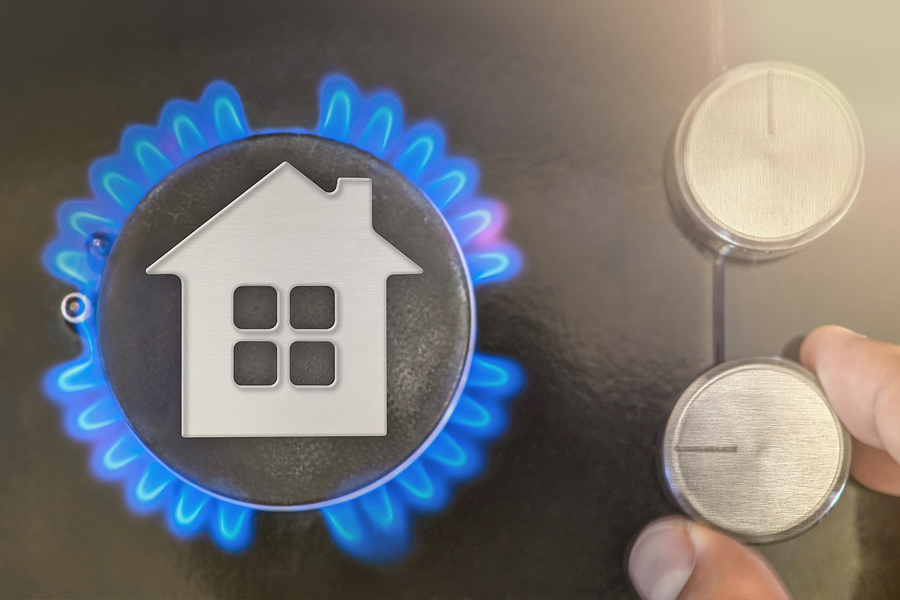
Over the past few years, with many people facing a choice when installing their new boiler, quite a few homeowners and building managers have been examining their options, with three main choices coming to mind.
The first of these, to install a newer and more efficient gas boiler, is one that has always been an option, although this fact has only been made clearer in recent months with a shift in energy policy.
The alternative, to install a heat pump, is popular and could provide some energy-saving and environmental benefits in the long run, but also requires an intensive and expensive installation process to retrofit into an existing house.
The third option was the potential middle ground of a hydrogen boiler, which would work much like a gas boiler but replace fossil gas with hydrogen, a gas that can be generated in an environmentally friendly way through electrolysis.
At one point, hydrogen boilers were the focal point of future energy strategy, and early tests to see if the National Gas Grid could handle a switch to 100 per cent hydrogen showed promising results.
However, the current situation is complex, and previous goals of having 100 per cent hydrogen boilers on the market by the year 2025 seem somewhat optimistic.
The potential to use a blended mix of fossil gas and hydrogen is possible, and some manufacturers have advertised their boilers as being “hydrogen-blend ready” because of this.
This proved to be controversial and even led to an investigation by the Competition and Markets Authority. Why was this?
Repackaging Present And Future
The investigation concerned Worcester Bosch and their range of hydrogen-blend ready boilers, which claimed to run on a gas blend of up to 20 per cent hydrogen with no modifications.
There were several issues with this marketing campaign. The first issue was that the wording gave the impression that “hydrogen-blend ready” was the same as “hydrogen ready”, which is not the case.
Hydrogen-ready boilers are a conceptual boiler idea that functions as a conventional boiler until it is time to switch to 100 per cent hydrogen gas, which can be done through an easy process of changing a few parts.
No hydrogen-ready boilers have hit the market as yet, nor have 100 per cent hydrogen boilers, but it was seen as a middle-ground option at one point if there was a premature switch to hydrogen.
The second, and much bigger problem is that the “hydrogen-blend ready” boiler was touted as something special and environmentally friendly when in reality any boiler made this century has been legally required to function with up to 20 per cent hydrogen.
The entire reason why 20 per cent was chosen as a potential transition point is because nearly all boilers functioning today will be able to use it without modification.
The CMA required Worcester Bosch to remove and change existing marketing materials and get in touch with their installer and retailer networks to remove these claims and claims that a boiler of this type “future-proofs” a heating system.
What will happen next with hydrogen boilers is unclear but this should provide reassurance that even if there is a phased transition to hydrogen, a new boiler will be able to manage it.