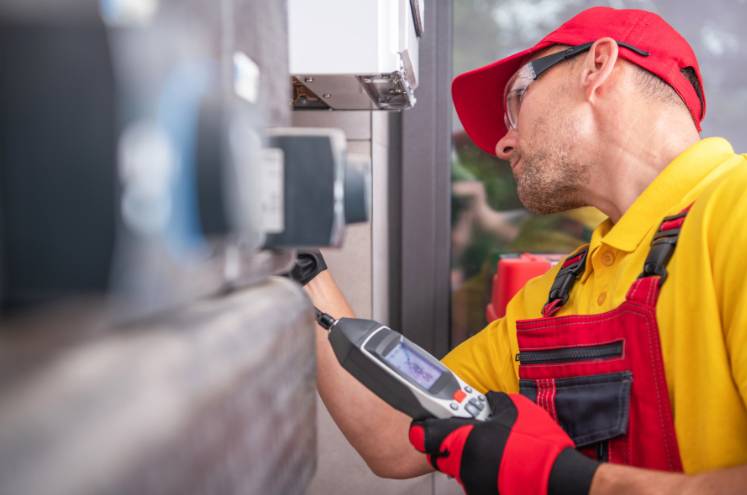
If you have a problem with your boiler or any other gas appliance in the home, you should be aware that it is not something you should ever try to fix yourself.
Getting someone qualified to work on it is the obvious thing to do. Not only will they have the skills and knowledge to identify the problem and fix it, but it would be extremely risky to have anyone without the requisite training and skills to carry out the work.
The consequences of getting it wrong can be devastating. Last month, for instance, a suspected gas explosion in a caravan in Cornwall left a man with life-changing injuries. Other instances, such as in a house in Swansea last year, can lead to fatalities, as well as leaving properties in ruins and damaging nearby homes.
Thankfully, incidents like this are rare, as are cases of carbon monoxide leaks that can poison people.
However, the uncommon nature of such incidents owes nothing to a lack of inherent danger with gas. If a gas leak comes into contact with a spark or open flame, a devastating explosion is possible, while a failure to fit a flue to siphon off the carbon monoxide can lead to it building up in dangerous quantities in the home.
The reason such incidents do not happen often is that skilled technicians know how to ensure appliances are safe and secure. Moreover, by law, they have to be fully qualified to do such work.
Engineers can prove they are fit to do the job by showing customers their Gas Safe Certificates. These prove that they, and the companies employing them, are on the Gas Safe Register.
The register was established in 2009, covering all gas work in Great Britain, Northern Ireland, the Isle of Man, Guernsey and Jersey. It was set up with the precise aim of ensuring that gas work was carried out safely and that illegal workers and rogue firms could be rooted out and prosecuted.
We and our engineers are on the register and when one of our engineers calls round, you can ask them to show their Gas Safe certificate to demonstrate that they have the necessary accreditation to do the work. Engineers cannot just ask to be on the register; they must have the relevant qualifications to be allowed to join.
The Register also carries out inspections on companies and engineers to ensure they have the right accreditation, investigates complaints in instances where a breach is suspected, imposes penalties, and passes details of any suspected breaches to the Health and Safety Executive, which has the power to prosecute anyone carrying out unsafe work.
Such prosecutions have led to unqualified or disqualified engineers facing huge fines and even prison sentences, which shows the powerful deterrent effect such action will have.
Above all, it means that when you need a gas engineer, you can check their credentials when they arrive. It ensures not only your safety but also your peace of mind when they have finished and you start using your gas appliance again.